A real coaching engagement
The best way to explain what coaching involves is to show it. Here's a real coaching engagement of mine, from first conversation to final review.
A typical executive coaching engagement runs over six months, in six structured stages. Here's how that played out for Sean, a senior software developer starting a demanding new role at a leading financial exchange.
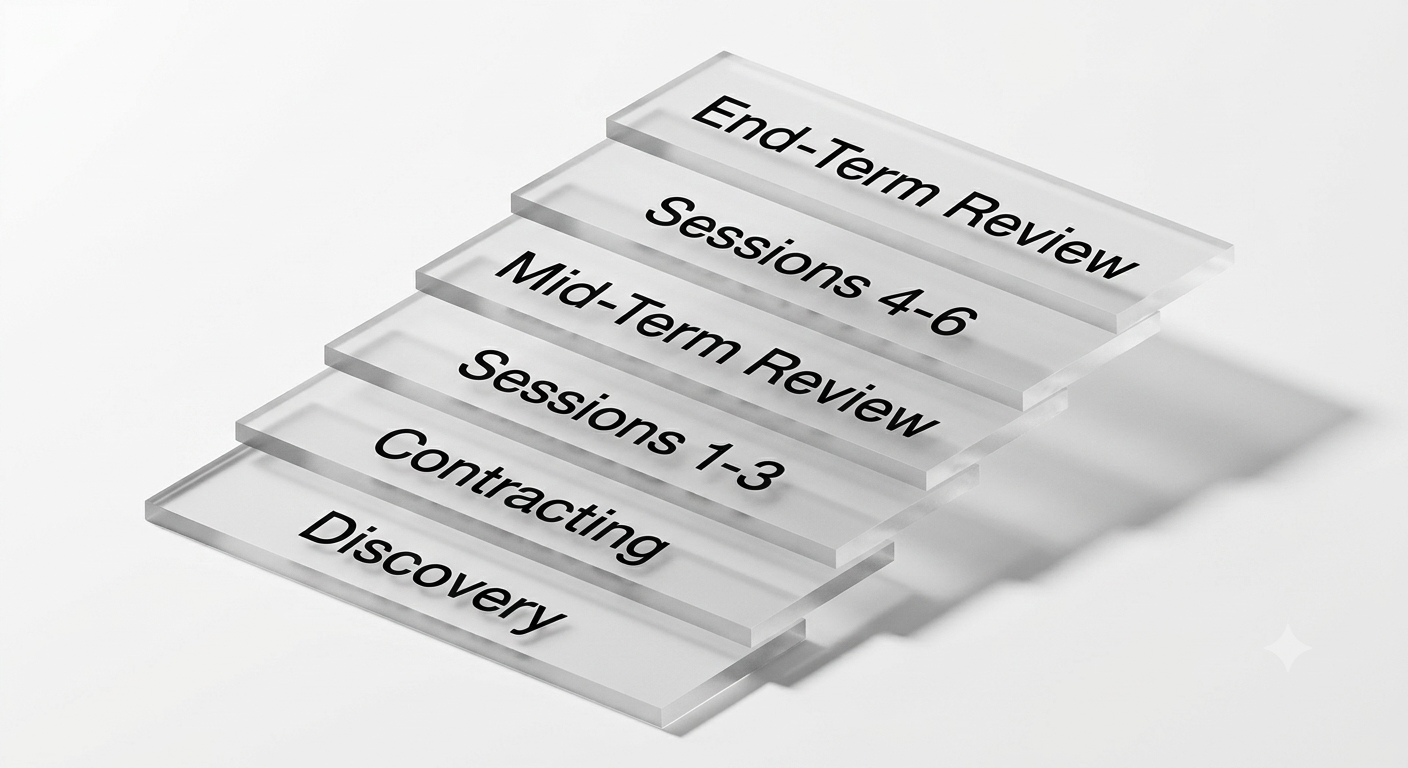
A short, no-cost conversation to introduce the coach, set expectations, and confirm the client is happy to proceed.
A formal agreement between coach and client, setting out what's expected of each party.
Three sessions, usually one per month, each one hour, focused on the client's goals.
Coach, client, and any key stakeholders review progress made and refine goals going forward.
Three further monthly sessions, continuing the work.
A final review of progress with coach, client, and any key stakeholders.
Each session follows the TGROW framework — the client leads, I provide the structure. Here's how Sean's very first session actually ran:
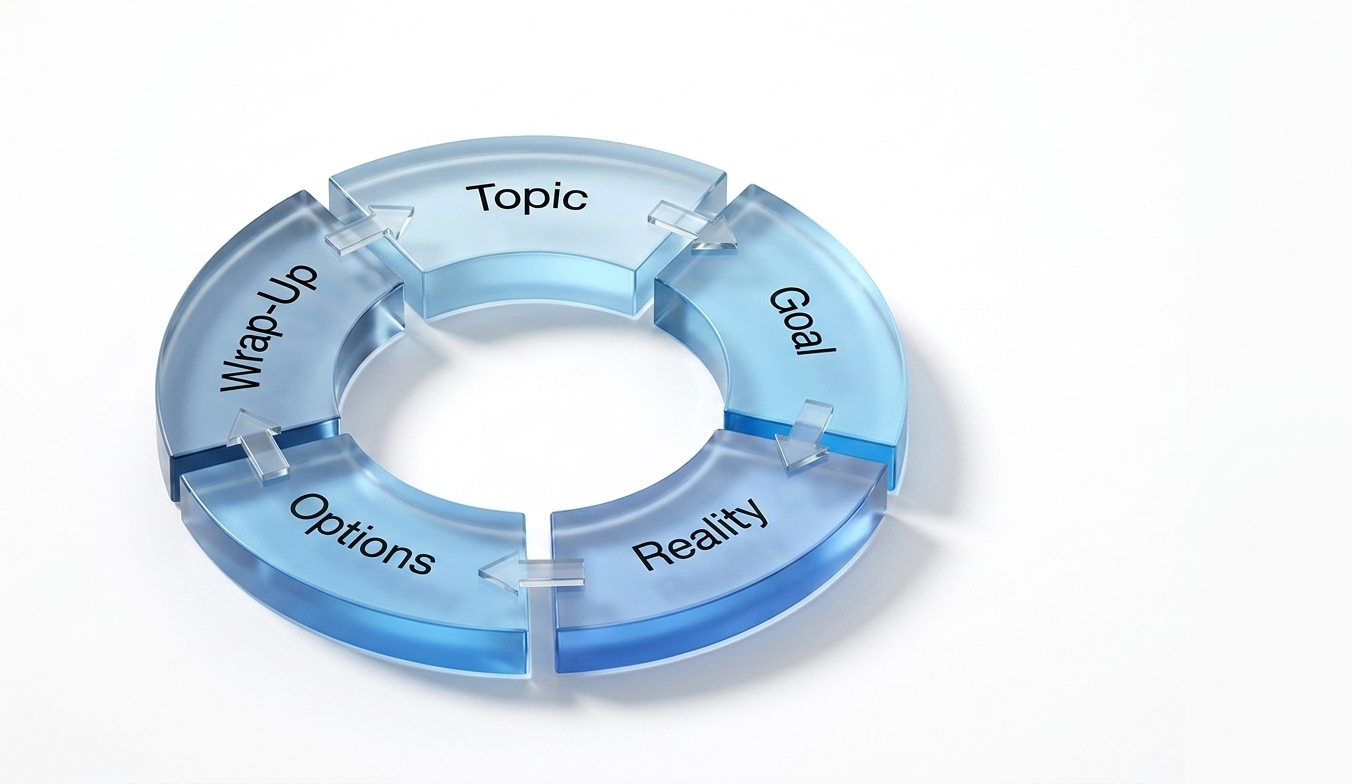
The client brings a prepared topic for the conversation.
The client defines the desired outcome for the session.
The client describes the current situation.
The client works through possible next actions and any obstacles.
The client summarises the conversation and next actions, confirmed by email to the coach.
About coaching
Coaching is a partnership: the coach acts as a sounding board and awareness-raiser in a thought-provoking process that helps the client maximise their own potential. It's distinct from two things it's often confused with:
Mentoring
Sharing of experience and knowledge in a specific area of expertise.
Counselling
Often addresses past issues that are preventing progress, and can involve mental health conditions. Provided by a qualified therapist, not a coach.
Professional standards
As an EMCC member, Neil commits to the Global Code of Ethics, ensuring a professional, transparent, and accountable coaching relationship.
 Vine Leadership Coaching